Showing posts with label professors. Show all posts

December 11, 2008

Things could be worse...

Much has been made of the administration's proposal to institute a one-year salary freeze for professors, staff, and librarians. That has understandably upset a number of people, but it pales in comparison to what's going on up at Brandeis: Professors are considering reducing their salaries by one percent to avoid staff layoffs:

Lawyers are still vetting the details of the proposal but, in short, interested faculty would contribute to the cause either by forgoing 1 percent of their paychecks, or via a charitable contribution to a reserved Brandeis fund. Faculty would volunteer individually and anonymously (“only the payroll office would know,” Flesch said), without any cuts to their listed base pay. And, to avert concerns about freeloading, contributions would kick in only if there is a critical mass of willing faculty — if those who volunteer collectively earn at least 30 percent of the total faculty salary pool within the College of Arts and Sciences.

Concerns voiced about the Brandeis proposal at a recent faculty meeting reflect, at least in part, questions of trust. According to Flesch’s account, and an account in the student newspaper, some faculty raised concerns that the foregone pay would be used for purposes other than shielding staff, and, more philosophically, that the administration would see the move as a concession suggesting that faculty could be paid less in the future.
I don't know how the salaries of Brandeis professors compare to those at Wes, but this seems like a pretty drastic step to take. Talk about altruism.

Inside Higher Ed: Taking One (Percent) for the Team

August 27, 2008

Tenured Radical on Helicopter Parents

Professor Claire Potter has a great entry about helicopter parents up at Tenured Radical:

Yesterday several of us were reminiscing about being dropped off at college. The big topic was: "How did you get them to leave?" -- them, of course, being parents. Not everyone, of course, had this problem. Parents used to the boarding school routine knew what other parents did not: that it was only a precious nine weeks to Thanksgiving; they literally dropped their offspring on the curb with a stereo, a typewriter and a duffel bag, and gunned it out of there. Several of my friends who came East (or went West) to school remember just being put on a plane with a couple suitcases. My parents, however, made the ritual drive to Oligarch. When it looked like my mother was about to start ironing my socks in a strategic ploy to not return home without me, my father said brightly, "I could really use an ice cream!" and spirited everyone onto the street. After that, wrapping Mom in duct tape and putting her in the trunk was a cinch. And I was free! Good old Dad.

It's more difficult to get rid of parents in a timely way now. Administrators in charge of this crucial life transition have responded to parental hovering by creating formal, structured activities for the (soon to be) bereft grown-ups so that there can be an equally formal transition to the moment they are asked by other grown-ups, firmly but politely, to leave. Now, please. This means that being dropped off at college is now at least a two-day event, if not longer, where the moment between meeting your roommates and one of them saying happily, "Who wants to get high?" has been prolonged indefinitely. [...]
Can you relate? Read more at her blog.

July 3, 2008

NYTimes: Progressive professors a nonrenewable resource?

In an article today headlined "The ’60s Begin to Fade as Liberal Professors Retire," the NYTimes suggests that the hippie-influenced activist Baby Boomer professors are starting to retire - and their academic replacements are leaning more and more toward the moderate and inoffensive.

Yet already there are signs that the intense passions and polemics that roiled campuses during the past couple of decades have begun to fade. At Stanford a divided anthropology department reunited last year after a bitter split in 1998 broke it into two entities, one focusing on culture, the other on biology. At Amherst, where military recruiters were kicked out in 1987, students crammed into a lecture hall this year to listen as alumni who served in Iraq urged them to join the military.

In general, information on professors’ political and ideological leanings tends to be scarce. But a new study of the social and political views of American professors by Neil Gross at the University of British Columbia and Solon Simmons at George Mason University found that the notion of a generational divide is more than a glancing impression. “Self-described liberals are most common within the ranks of those professors aged 50-64, who were teenagers or young adults in the 1960s,” they wrote, making up just under 50 percent. At the same time, the youngest group, ages 26 to 35, contains the highest percentage of moderates, some 60 percent, and the lowest percentage of liberals, just under a third.

When it comes to those who consider themselves “liberal activists,” 17.2 percent of the 50-64 age group take up the banner compared with only 1.3 percent of professors 35 and younger.

“These findings with regard to age provide further support for the idea that, in recent years, the trend has been toward increasing moderatism,” the study says.

The authors are not talking about a political realignment. Democrats continue to overwhelmingly outnumber Republicans among faculty, young and old. But as educators have noted, the generation coming up appears less interested in ideological confrontations, summoning Barack Obama’s statement about the elections of 2000 and 2004: “I sometimes felt as if I were watching the psychodrama of the Baby Boom generation — a tale rooted in old grudges and revenge plots hatched on a handful of college campuses long ago — played out on the national stage.”

As commenters have pointed out, professors overall still seem to be overwhelmingly Democrat-supporting. Anyway, somehow I don't think this is going to be as huge an issue at Wesleyan... recalling certain recent young Wesleyan professors like Ly.nn Owens and Eyal Rabinovitch (though they aren't at Wes anymore)...

June 16, 2008

Professor Out on a Lim

If you're a political junkie you might be interested in "Out on a Lim", Assistant Professor of Government Elvin Lim's aptly named blog on current American presidential politics. Link added to "Wes 2.0" sidebar.

Thanks to Bradley Spahn '11 for the tip.

June 12, 2008

More Newly Tenured Professors

The Board of Trustees is granting tenure to three more faculty members this summer:

Katja Kolcio — Associate Professor of Dance
Katja's research interests are focused on social somatic theory, the role of somatic creative experience in practices of knowledge production, namely pedagogy, research methodology, and technology.

Edward Moran — Associate Professor of Astronomy

Edward's area of specialization includes cosmic x-ray background radiation, obscured active galactic nuclei, black holes in the nuclei of dwarf galaxies, and the nature of power source in LINER galaxies.

Cláudia Tatinge Nascimento — Associate Professor of Theater
Cláudia's teaching and research interests lie in the intercultural and avant-garde performance, ritual and performance, and in Brazilian theatre.
Congrats to these professors, more info about them can be found here.

May 18, 2008

Prof. Potter's comment

By request, here's the comment that Prof. Claire Potter, aka Tenured Radical, wrote on Ed McKeon's blog:

As a blogger myself who has often been criticized for responses to things that are too quick and idiosyncratic, I don't want to come down too hard on you. But -- allowing for the fact that students were drunk and undoubtedly overreacted because of that -- that the police showed up with dogs, tasers and pepper spray in the first place is outrageous. Tasers are sometimes a lethal weapon, not a harmless crowd-control device. Pepper spray, if it gets in the eyes, can cause permanent damage. To be attacked and bitten by a dog is a terrifying and possibly life-changing experience. At its worst, the party was a noise nuisance: students were not trying to interfere with a function of government, nor were they doing anything more harmful than being a pain in the ass to some of their neighbors. Students did not deserve riot control tactics typical of Birmingham in the 1960's or the West Bank for acting as kids do when they are confronted by authority. While I wish our students had simply been compliant and not escalated the confrontation, not being deferential to unreasoning, violent authority should not make anyone -- Wesleyan students or Middletwon citizens -- subject to assault and battery by the police.

The Middletown Police response is a function of the ways law enforcement in general has been amped up in the past eight years by Homeland Security money, using a non-existent threat of domestic terrorism as an excuse. The MPD used this as an excuse to make an example of Wesleyan students -- nothing more, nothing less. And an argument that says the students deserved it because they didn't follow orders is just absurd. If your kid doesn't do what you say, do you have the moral -- much less the legal -- right to whip him?

There is tremendous resentment of Wesleyan in Middletown, something the university has been trying to address and needs to keep working on, and in this case, the MPD are the leading edge of that resentment. But there are two issues internal to Wesleyan that also need to be addressed: Wesleyan Public Safety's decision making here, and their possible grievances in terms of what they have to deal with all year (rudeness, aggression from students when they are trying to do their jobs) in relation to such events while also being available 24-7 to be cab drivers, open locked dorm doors, and transport students in various states of inebriation and disrepair; and the possible consequences of Wesleyan's policy of selling off its houses, which will bring private homeowners in Middletown into closer contact with student events like this one.

Claire Potter
Professor of History and American Studies
Wesleyan University

May 5, 2008

"Slotkin! Slotkin! Slotkin!"

Olin Professor of English and American Studies Richard Slotkin is retiring from teaching at Wesleyan. Check out student video of his last day of teaching, which apparently was today (which is odd, because I'm pretty sure I've got AMST201 with him tomorrow afternoon). The Film Department brought in a mariachi band to celebrate:


The funniest part is definitely after 6:06... Slotkin suggests partying with tequila instead of champagne, and the person filming whispers, "Tequila shots with Slotkin!" You can feel his utter joy at the prospect.

Thanks, Gabriel Elder '11!

March 31, 2008

Professor Lecture at Alpha Delt


This Wednesday, Professors Donald Moon and Mary-Jane Rubenstein will be speaking on the topic of faith, nonviolence, and political action at Alpha Delt. The lecture will be followed by dinner with both of them at the Star and Crescent*

Date: Wednesday, April 2nd
Where: The Alpha Delt Greene Room
When:
4:15

*limited seating, and you still have to pay for meals

March 26, 2008

Newly Tenured Professors '08

The Wesleyan Board of Trustees recently announced the promotion with tenure of several faculty members:

Christiaan Hogendorn, Economics
Allan Isaac
, English
Andrea Patalano, Psychology
Aradhana Sharma, Anthropology/FGSS
Gina Ulysse
, Anthropology/African-American Studies

Congrats to them, click here to see more details of the work these professors have done.

March 16, 2008

What Obama Means

Professor Melanye Price has an op-ed in the Hartford Courant today about Barack Obama:

Media pundits and supporters claim Barack Obama is at his best when viewed in person, so I went to the recent Obama rally at the XL Center in Hartford to see for myself. Ultimately, I came away convinced that Obama actually could succeed. I found myself both embracing and eschewing the conflicting meanings of an Obama presidency.

The most audaciously hopeful aspect of an Obama rally has to be the attendees, who represent every demographic imaginable. Waiting with me were professors, white suburban mothers, Obama gear-clad teenagers, an older African American couple, and a group of young black and Latino men.

As we waited with thousands, we became unlikely allies, holding places for bathroom breaks, scouting the best entrance and seats and discussing Obama's appeal. Were we a "grand coalition for change" as Obama suggested? Moreover, could he translate our differing versions of change into coherent policies?

Click here to continue reading Professor Price's piece at the Hartford Courant website.

Personally, I liked the op-ed, but the 128 (and counting) comments it's generated are entertaining too. One non-representative sample:
0ne problem...EXPERIENCE.

If Hillary and Barack were your 2 choices of surgeons to operate on you ~ which would you choose?

-and don't reply with an; "A new doctor knows the latest procedures as all doctors are getting constant information on the medical subject."

I will vote for EXPERIENCE...I will vote for HILLARY!

When does politics or governance = surgery or medicine?

March 14, 2008

Prof Herbst's team analyzes star particles

Prof Herbst has been studying the star KH15D, which is actually two stars orbiting around each other. KH15D is uniquely located with some fairly unique properties such that his team has been able to determine more about the star's makeup and formation.

Back in 2002, astronomers from Wesleyan University concluded that a star brightening and waning in an unusual 48-day rhythm was dipping in and out of stuff swirling around the star in a so-called protoplanetary disk. At the time one astronomer called the system “a Rosetta stone,” for understanding how planets form.

Now, after six more years of observation with an international group of astronomers, led by William Herbst of Wesleyan, researchers say they know what the stuff in this disk is. In a paper published on Thursday in the journal Nature, they report that it is made of sand-size grains, roughly a millimeter in diameter, which must have grown from infinitesimal dust particles over the three million years that the star, known as KH 15D, has been in existence.

“This is the first step in going from smoke particles to macroscopic things like planets and asteroids,” Dr. Herbst said in an interview, noting that these grains were about the same size as those found in many meteorites. Observing starlight reflected from these grains, he said, represented a rare opportunity to study the structure and chemical properties of material in the inner parts of another planetary system.

Read more of the NYTimes article or the Slashdot discussion of it.

March 3, 2008

Social Justice Day submission deadline extended

Miss the deadline to submit your session proposal for Social Justice Day? Never fear - today's deadline has been extended to Friday, March 7th to give more individual students, student groups, staff, and faculty the opportunity to share the issues they are passionate about with the Wesleyan community.

Social Justice Day is meant as an opportunity for student activists to collaboratively engage with each other and with their professors on issues that relate to social justice and social change.

If you know a professor who might be interested in an opportunity to share an outside interest that they haven't been able to relate in the classroom, let them know!

WSA Prez Matt Ball '08 writes about the nuts and bolts:

Social Justice Day is really a succession of sessions - anyone can apply to put on an hour session in which they have a discussion, give a lecture, or do something else creative. Because they'll all be organized together, there will be spillover from event to event, bringing in different people into different sessions in order to foster the kind of "message outreach" that we'd like to achieve. There will also be a lunch with a directed discussion, perhaps splitting into smaller groups to discuss different issues. In addition, groups can bring outside speakers if they'd like, and we have funding that we're willing to tap into to help groups fund their events.
Submit your proposal here.

January 6, 2008

Wesleyan professors' books reviewed in NYT

The New York Times is good for more than telling us how rich Yale is. As Ashik Siddique '10 noticed, the Times also reviewed two books by Wesleyan professors this weekend.

Chair of the Film Department Jeanine Basinger's recent book The Star Machine appeared twice this weekend:

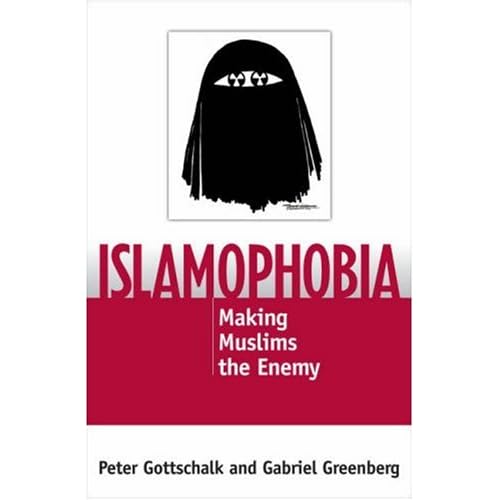
Also, an article called Cartoon Villains reviewed Islamophobia: Making Muslims the Enemy, by Professor of Religion Peter Gottschalk and Wes alumnus Gabriel Greenberg (see right).

While checking out these reviews for myself, I also came across the Times' Education Life section. I haven't read any of it yet, but it looks interesting and has features on campus protests, summer internships, and S.D.S..

July 10, 2007

Healthcare for Adjuncts

It seems at Wesleyan the only time anyone really cares about a professor's tenure status is during evaluations. "Does he have tenure?" "Yeah." "Oh, then fuck this." And the student crumples up the evaluation and leaves. Well, the problem is when professors aren't even in the running for tenure. Visiting professors and adjuncts are not on the tenure track. Colleges see them as temporary employment for temporary shortages and their treatment reflects their evident disposability. As such, they tend to face more job insecurity, less benefits, less academic freedom, considerably less pay and often greater workloads than many other tenure-track professors. Basically, they are the unsung heroes of academia.

One enterprising adjunct at Ivy Tech sought to throw a benefit concert, using the proceeds to establish a safety-net fund for adjuncts who are mostly uninsured. And then she was promptly told to stop it. And then she was fired. Inside Higher Ed reports:

Then Meadows received e-mail messages from college administrators complaining about the tickets, which identified the name “College Relief Fund.” Ivy Tech officials complained that the word “college” violated the pledge by Meadows not to link Ivy Tech to the concert — so she blacked out the word “college,” leaving the tickets labeled only as “Relief Fund.” But more e-mail messages arrived, including one telling her to “cease and desist” and in a meeting with administrators, Meadows said that the she was told by administrators that the concert had become “a PR nightmare” by implying that Ivy Tech doesn’t treat its adjuncts well.

After more meetings, and fearing that she was unfairly being labeled a troublemaker, Meadows agreed to call off the concert. Within a few weeks, despite earlier receiving good indications about her future, Meadows received a certified letter from the college saying that her contract would not be renewed. Under her contract, the college did not have to specify a reason for non-renewal, and it didn’t.

Martin Benjamin, professor emeritus of philosophy at Michigan State University and chair of the American Philosophical Association’s Committee for the Defense of the Professional Rights of Philosophers, said he was intrigued by the case as soon as Meadows told him about it. So he requested copies of all the documents and e-mail exchanges. After reviewing them, he wrote to the Ivy Tech chancellor this week to ask for reasons why Meadows is no longer employed.

“It’s a prima facie case that her rights may have been violated,” Benjamin said. He said he was waiting for the Ivy Tech response, and that he couldn’t prove a link between the concert and the non-renewal, but that the timing raised questions. “It looked like she’d been doing an excellent job, had the esteem of her colleagues, good teaching evaluations, and it was very surprising that she would not be given a contract,” he said. “It seems like everything they asked her to do, she did.”

Richard Schneirov, a professor of history at Indiana State University and president of the Indiana AAUP, has also been looking into the case and talking to faculty members who, because of what happened to Meadows, do not want to speak out. Based on the interviews he had conducted and the documents he reviewed, “there is no doubt” that Meadows lost her position because she tried to raise money to help adjuncts, he said.

Whether or not she was fired because of her actions is beside the point. The point here is that adjuncts are treated like crap by colleges and Wesleyan is not necessarily exempt. The poor treatment of adjuncts is a problem that has permeated higher education from top to bottom.

I'm sharing this story because it upsets me greatly to see how many of my favorite professors are thrown away year after year because Wesleyan felt they were disposable. I'm discomforted knowing that many of my professors who work as hard as any other are driving around New England teaching at multiple colleges just to make ends meet.

While Wesleyan isn't as offensive as Ivy Tech, I think we should all be thinking a little bit more about how our professors and professors everywhere are treated. Tenure is a weird, complicated process which does serve to protect the welfare and freedom of some professors, but there should be some guarantee of security for all professors, no matter their tenure status. And I believe firmly that health care should be a basic right, if not ideally guaranteed nationally, then at least institutionally. Just because this is how it is and how it's always been done doesn't mean this is how it ought to be.

June 10, 2007

A Professor's Night Out...

Brad Neely (of Washington, Washington fame) makes this hilarious series called the Professor Brothers. Anyway...


June 5, 2007

Is Ratemyprofessors Right?

Inside Higher Ed reports:

What if RateMyProfessors.com — the site that professors love to hate — is more accurate than they think? Or what if officially sanctioned student evaluations of faculty members — which many professors like to contrast with RateMyProfessors.com — are just as dubious as RateMyProfessors?

Those are questions raised by a new study by two professors at the University of Maine who compared the ratings on RateMyProfessors.com of 426 Maine instructors with the formal student evaluations used by the university. The results were just published in the journal Practical Assessment, Research & Evaluation. The key findings are that RateMyProfessors.com ratings have a significant correlation with the formal student evaluations on the questions about the overall quality of the course and the relative difficulty or ease of the course.

Complaints about RateMyProfessors.com are widespread. Because the site doesn’t seek representative samples of students, or even ensure that students are ranking professors whose courses they have taken, a challenging professor may receive low scores from students who never did the work and an instructor who gives everyone A’s may be nominated for professor of the year. Studies have found that the best way to score well on RateMyProfessors.com is to look “hot” and be an easy grader.

So what does it mean if RateMyProfessors.com has a high correlation with the kinds of student evaluations that colleges see as more valid? “The results of our study are meaningful only insofar as one regards student evaluations of teaching as meaningful,” said Ted Coladarci, professor of educational psychology at Maine and the author of the new study, along with his Orono colleague, Irv Kornfield. Someone who believes that formal students evaluations “are of little value” would find their correlation with RateMyProfessors to be “at best, entertaining,” Coladarci said.


(more)

April 5, 2007

The Jon and Jess Variety Show: Still in the Running

Congrats! WesAlums and former improv kids Jon Golbe '06 and Jess Lane '06 are making history. Well, they're making history for themselves or something. Their latest show The Jon and Jess Variety Hour on channel102.net is their longest running show to date, after two canceled shows Teen Homicide and Anne Frank: The Lost Pages. Despite the fact that The Jon and Jess Variety Hour isn't actually an hour, it managed to nab the 4th place prize and will now return for a fifth episode. While I'd still say that the third episode is my favorite, I have to give props for the "Wild Wild West" choreography and the shoutouts to Professor Richard Slotkin in the site's forums.

If for some strange reason you happen to be in NYC on Monday April 30th at 8PM, make sure to head over to the Anthology Film Archives to vote for the next episode and keep this show going.

March 26, 2007

Stem Cell Research Niche at Wesleyan?

Daniela Altimari of The Hartford Courant brings us this story of two Wesleyan Professors who are using stem cell research to find new possible ways to treat epilepsy:

Wedged between UConn and Yale, the powerhouses of stem cell research in the state, two Wesleyan University professors are working to determine whether these building blocks of life can be used to treat epilepsy.

The research being done by Jan Naegele and Laura Grabel involves implanting embryonic stem cells into the brains of mice that experience epileptic seizures.

Few non-scientists understand the complexities of their work. They simply want to know when there will be a cure. Embryonic stem cells, which have the potential to develop into any type of cell in the body, are a promising source of potential treatments for afflictions such as spinal cord injuries, Alzheimer's and epilepsy.

Naegele and Grabel, like most stem cell researchers, don't expect their research to lead to immediate treatment therapies. "There's a real danger of people having their hopes raised," Grabel cautioned. "The investment needs to be made today, but it's not going to lead to a cure overnight."

"I have a kind of long-term mentality," added Naegele. "We're going to try and make progress step-by-step."

The two scientists, whose labs are across the hall from one another at Wesleyan, have taken a significant step forward in recent months: After years of patching together funding, they each received major grants.

Grabel, a professor of biology at Wesleyan, will get $800,000 from the state for her project, one of 21 supported by Connecticut's $20 million stem cell initiative. While the bulk of that money - about $12 million - will fund research at the University of Connecticut, Wesleyan's small but vibrant stem cell program also will receive a boost.

"It's been fun to watch Wesleyan's profile rise here in the state," said Grabel, who will participate in StemCONN '07, a two-day symposium on stem cell research that begins today in Hartford.

Although President Bush vetoed a provision last summer to spend federal money on human embryonic stem cell research, Connecticut and several other states have launched their own programs.

Dr. J. Robert Galvin, the commissioner of the state Department of Public Health and chairman of its stem cell advisory board, said Grabel's proposal received strong marks from the committee reviewing the proposals. "Wesleyan University is nowhere the size of the University of Connecticut or Yale," he said. "However, the quality of the work is very high."

(more)

March 2, 2007

Professor Finn's Omelets

Government Professor John Finn this weekend showed off his "Finn Flip" at Green Street while demonstrating the proper way to cook an omelet. That's pretty legit. I'd probably get it stuck to the ceiling somehow.

February 21, 2007

My Professor Said What?!

  • "I could be a TV preacher, I think."
  • "Don't tell me that volcanoes form because table cloths fall off tables!"
  • "If there was no planetary core, trampolines would be really fun."
  • "There may be some goths who put fluoride ions on their eggs while they are piercing their belly buttons."
  • "You can fit a couple of grenades in a good sized handbag."
  • "I would like to suggest that all you American males are impersonating Elvis, in some form or another. Hopefully not in his white leather phase."
  • On Borat: "It was the only movie I've ever seen with more penises than breasts. In fact, there were no breasts. Not even Pamela Anderson's."
  • "Oakeshott lived from 1901 until 1900...That's right. He lived into the past. Very few manage to do that."
  • "There is transparency, you just have to look for it."
    - Doug Bennet, at the first Milk and Cookies.